

In the beginning, drones were eyes in the sky. Simple, singular, and largely unthreatening. They hovered quietly over training fields and conflict zones, gathering intelligence or snapping images. But like all technologies born from utility, drones didn’t stay simple. They learned to think together. And in that shift—from lone flyer to coordinated swarm—they became something much harder to predict, harder to stop, and far more dangerous.
At first, the radar stays quiet. There’s nothing visibly approaching. No sirens. No unusual RF signatures. And then, almost all at once, something shifts — not one target, but dozens. Moving low, fast, and coordinated. Not in formation, but with purpose. Within seconds, they’ve breached the perimeter, jammed comms, confused optics, and vanished. That’s not science fiction. That’s swarm warfare in 2025.
We’ve long known drones could change how war is fought. What we didn’t anticipate—at least not fast enough—was how quickly they’d start thinking together.
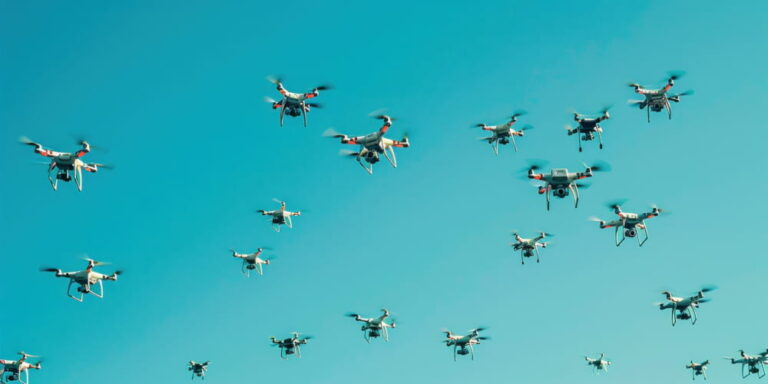
From Lone Drones to Coordinated Chaos
To understand what drone swarms represent today, you have to go back a decade. The first coordinated drone attack that truly caught the world’s attention came in 2018, when a dozen low-tech UAVs attacked Russia’s Hmeimim airbase in Syria. It wasn’t just the volume, it was the choreography. Homemade and GPS-guided, these drones acted in unison, testing the limits of traditional air defence. That incident didn’t just raise eyebrows; it shifted doctrines.
Since then, the swarm has evolved from a rough prototype to a refined weapon. In the 2020 Nagorno-Karabakh conflict, loitering munitions and small drone formations tipped the scales of power. Ukraine accelerated the model. What began as scattered drone use in early 2022 became full-scale swarm applications by 2024, with FPV (First Person View) drones executing real-time strikes and decoy missions in parallel. Swarms were used not just to attack but to mislead, map radar responses, jam communications, and delay retaliation.
By mid-2025, swarm tactics had spilled across borders and into new domains. In the Red Sea, swarms were deployed as moving camouflage thus, masking larger naval operations beneath electronic noise. In Israel and Iran, cross-border drone activity surged, with multi-role drones executing reconnaissance and disruption in tightly packed waves. And in India, a sharp uptick in swarm-like incursions forced high-alert responses near strategic installations, including ports and airbases. Operation Sindoor became one of the more visible events, but behind the scenes, there were dozens of other moments where drone coordination revealed serious gaps in readiness.
How Drone Swarms Breaks the Rules
What makes swarms fundamentally more dangerous than traditional UAVs isn’t just what they carry, it’s how they behave. A lone drone can be tracked, targeted, neutralised. A swarm behaves like an intelligent mesh. It adapts mid-air. If one drone is lost, the others reconfigure. Some act as jammers, others as scouts. Some distract. Others strike. They don’t need GPS. Increasingly, they don’t even need a live operator. With onboard processing and banking of the capabilities of AI, they think locally and act collectively.
That’s the new asymmetry. Militaries that once relied on layered radar and command hierarchies now face decisions that must be made in seconds, not minutes. And the threats don’t stop at the battlefield. Swarms are capable of targeting oil refineries, airports, data centres, and public events. Even unarmed drones can be used to confuse, delay, or surveil—and in swarm form, that confusion becomes compounded.
Smarter Systems for Smarter Threats
India has taken significant steps to prepare. Advanced systems like Zen Technologies’ Vyomkavach represent growing domestic investment in counter-drone solutions. But systems alone aren’t enough. What matters is how they’re integrated, how quickly they respond, and how intelligently they can interpret swarm behaviour.
This is where Zen Technologies brings a different kind of edge. Deeply embedded in combat training and C-UAS systems, Zen doesn’t just build technology, it trains the mindset needed to use it under pressure. Our counter-drone platforms are designed with swarm logic in mind, using sensor fusion across RF, electro-optical, and acoustic channels to recognise and track multiple threats at once. Real-time AI processing allows for rapid escalation decisions—spoofing, jamming, kinetic action—without relying on manual assessment.
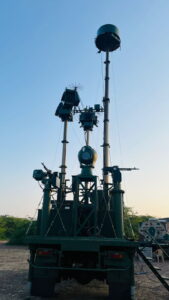
Zen Anti –Drone System, Vyomkavach
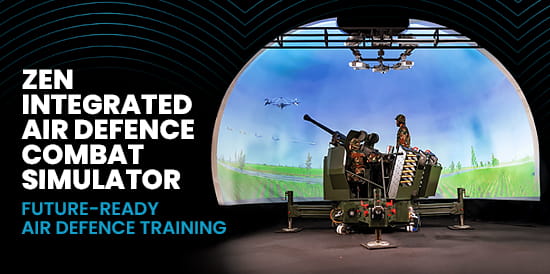
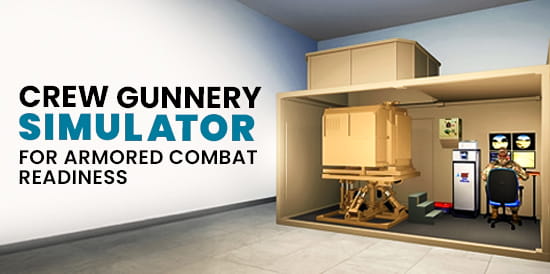
With Zen’s simulation-driven approach, operators are trained not just to use equipment, but to think under saturation. In Zen’s virtual environments, personnel are exposed to chaos before it happens—learning how to manage signal floods, shifting swarm paths, and multi-axis intrusions. It’s not reaction. It’s rehearsal. Swarms are not the future threat. They’re the present challenge. And the only real defence against an intelligent network is a smarter one. With the right systems, the right integration, and the right training, chaos becomes manageable.
Zen Technologies isn’t just preparing for the next wave. It’s preparing those who will face it.
Leave feedback about this