

The 21st century is not witnessing fewer wars — only smaller ones that echo louder.
From Gaza to the Caucasus, from the Red Sea to the Himalayas, the global order is fracturing into localised global conflicts — disputes contained by geography but amplified by geopolitics. These are conflicts that start in one valley or one strait and reshape the behaviour of entire regions, economies, and alliances. Small in geography but massive in implication. They are fought in grey zones: using drones instead of divisions, cyberattacks instead of artillery, and disinformation instead of declarations.
India, with its vast borders and layered internal security challenges, stands at the centre of this new era of fragmented warfare. The question facing policymakers and defence planners is no longer whether India can win a conventional war but whether it can manage multiple, low-intensity, high-impact conflicts at once.
India’s Map of Fragmented Flashpoints
India’s geography itself is a study in friction. Each direction presents a different form of localised pressure — tactical, informational, or territorial — each linked to global undercurrents.
North: The New High-Altitude Chessboard
The northern frontier with China is no longer a frozen line on a map — it’s a live laboratory of grey-zone warfare.
Since the 2020 Galwan Valley clash, the region has undergone a transformation that still defines India’s strategic posture in 2025. What began as a bloody skirmish five years ago became a permanent trigger for military modernisation and infrastructure parity in the Himalayas.
Both sides have since embedded technology deep into the mountains. The People’s Liberation Army (PLA) has built all-weather roads, underground bunkers, and high-frequency radar arrays, while integrating drone surveillance and autonomous logistics at altitudes above 14,000 feet. In response, India has accelerated its own modernisation — from high-altitude drone deployments and AI-assisted reconnaissance to 24/7 satellite monitoring and faster troop mobility via Ladakh’s new strategic road networks.
The LAC today is less about soldiers staring across outposts and more about sensors, satellites, and signals — an invisible war of vigilance. It remains the testing ground for deterrence by presence, where the side that sees first and moves faster holds the advantage, even without firing a shot.
West: Hybrid Pressure on the Line of Control
The western frontier with Pakistan has evolved from a conventional battlefield into a hybrid pressure zone — part kinetic, part cognitive, and increasingly digital.
Since the ceasefire reaffirmation of 2021, large-scale artillery exchanges have reduced, but what replaced them is far more complex: a constant low-grade contest of infiltration, drones, and disinformation. Over the past three years, intelligence reports have tracked a sharp rise in cross-border drone incursions — more than 300 incidents annually — with payloads ranging from small arms to narcotics. Each drop serves a double purpose: to arm local modules and to fund their persistence through the parallel drug economy.
These drones, often modified commercial quadcopters equipped with GPS guidance, have turned the LoC into a testing range for asymmetric innovation. But the threat isn’t limited to airspace. Alongside physical infiltration runs a steady stream of digital propaganda — coordinated campaigns on encrypted channels and social media targeting young populations in Kashmir, designed to sustain unrest long after the guns fall silent.
In 2025, this dynamic took a decisive turn with Operation Sindoor — India’s targeted strike on multiple terror infrastructure sites inside Pakistan and Pakistan-occupied Kashmir following a series of coordinated attacks in Jammu and Pahalgam. The operation, described by the Ministry of Defence as “focused, measured, and non-escalatory”, underscored how India’s strategy in the West has matured: precise, intelligence-led, and deterrence-oriented. It sent a message that hybrid provocations would no longer be met with restraint alone but with calibrated, technology-backed response.
India’s broader response has shifted from mere border defence to multi-layered deterrence. Ground-based counter-drone systems, AI-assisted radar surveillance, and fusion intelligence grids now combine to detect and neutralise threats before they cross the threshold. Indigenous systems — many developed by domestic defence firms — form the backbone of this silent war of sensors.
In this new western theatre, deterrence is not measured in territory held, but in seconds of reaction time. The challenge isn’t just stopping infiltration — it’s staying ahead of a strategy built on speed, deniability, and constant evolution.
East: The Frontier of Neglected Complexity
The Northeast faces a test unlike any other — one defined by insurgencies that blend politics, ethnicity, and geography into a single, shifting threat. The region’s volatility has deepened since the 2021 Myanmar coup, whose aftermath still ripples across India’s eastern borders. Refugee flows, weapons smuggling, and the movement of ethnic armed organisations through porous terrain have blurred the line between domestic unrest and cross-border conflict.
By 2025, India’s eastern frontier has effectively become an extension of the Myanmar conflict, with groups like the Arakan Army and People’s Defence Force engaging the Myanmar junta near India’s border states of Mizoram and Manipur. This instability, coupled with China’s covert influence in the northern Myanmar corridor, has made the region a geopolitical intersection — a place where local insurgencies and global rivalries quietly overlap.
For India, the challenge here is as much informational as it is territorial. Jungle terrain, multi-ethnic networks, and limited infrastructure mean that dominance depends not on firepower but on awareness — the ability to detect, interpret, and respond faster than the threat evolves. That’s why the focus has shifted to real-time intelligence, digital communication resilience, and AI-assisted terrain mapping, giving forces a dynamic picture of movement across dense forest belts and border villages.
Indigenous technologies now play a central role in this shift. Systems like integrated surveillance grids, mobile radar units, and border security management platforms — built and deployed domestically — are helping India convert raw geography into a strategic advantage. The new eastern doctrine isn’t about controlling territory; it’s about controlling uncertainty.
South: The Oceanic Theatre
The Indian Ocean — once a relatively quiet expanse — has become one of the world’s most contested maritime theatres, where local flashpoints carry outsized global consequences. China’s naval reach and expeditionary posture have expanded beyond logistics and port diplomacy into a more persistent operational presence across the Indian Ocean region. This is visible in PLAN deployments, Djibouti basing and a broader push to secure sea lines of communication.
Small-state alignments and port diplomacy have added strategic texture: the Maldives’ growing security and infrastructure ties with China, along with Beijing’s investments in nearby Sri Lanka and Pakistan, complicate New Delhi’s southern calculus.
At the same time, non-state threats have re-emerged as operational concerns. Piracy and armed robbery off the Horn of Africa and the Gulf of Aden returned to global attention after successful hijackings in 2023–24; India has been on the front line of anti-piracy operations, conducting high-risk rescues and long-range patrols.
These strategic and non-state pressures have made island chains and chokepoints—Lakshadweep, Andaman & Nicobar, the Maldives—critical. India is responding by expanding basing and surveillance (new facilities in Lakshadweep, enhanced use of the Andaman & Nicobar Command) while bolstering coastal radar and maritime domain awareness architectures.
Put together, the southern flank is a mosaic of localised risks—each local in geography but global in consequence. The defence posture that fits this theatre must be distributed, data-driven, and decisively indigenous: networked sensors, persistent ISR, unmanned surface and subsurface systems, and local partnerships to manage both state competition and lawless actors at sea.
The Readiness Shift: From Reaction to Prediction
Historically, India’s military readiness has been manpower-driven. But manpower, in an age of AI and drone warfare, is only half the equation. The new benchmark for readiness is predictive capacity — the ability to foresee threats, simulate responses, and integrate decision-making in real time.
Modern defence readiness requires:
- Simulation-based training that mirrors the complexity of real battlefields.
- Integrated sensor and data ecosystems that give commanders live situational awareness.
- AI and autonomous systems that reduce reaction time and human exposure.
- Interoperability between land, air, naval, and cyber domains.
The difference between being ready and being reactive now lies in how effectively these systems communicate and adapt. And this is where the rise of indigenous defence technology has become central to India’s long-term security strategy.
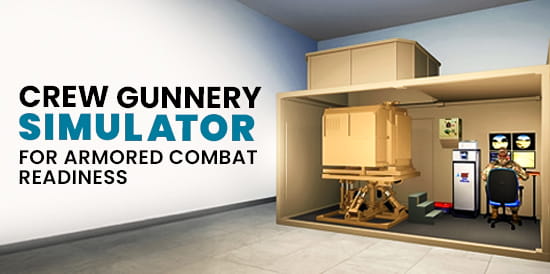
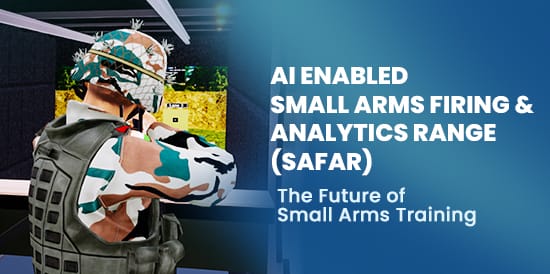
Companies like Zen Technologies exemplify this shift. Zen’s combat training simulators replicate complex terrains — urban, mountainous, or maritime — allowing forces to rehearse missions under realistic, data-driven conditions. The anti-drone and counter-drone systems respond to one of the most disruptive threats of this decade — low-cost aerial intrusions that bypass traditional defences. And Zen’s integrated live-virtual training platforms enable coordinated responses across multiple units, simulating the fog and friction of modern combat.
This approach represents more than innovation — it’s a mindset shift. In a world where conflict evolves faster than procurement cycles, training and readiness become the new deterrence.
Readiness Beyond Reaction
The world’s conflicts may be local, but their impact is global. India’s borders — land, sea, and digital — are the testing ground for this new era of warfare. India’s strategic advantage in the coming decade will not depend on having the most weapons, but the most ready systems — human, digital, and organisational. The future battlefield will reward prediction, coordination, and autonomy over brute force.
Readiness today isn’t about expecting the next war — it’s about ensuring the next surprise never arrives. As defence thinkers often note, nations don’t rise by avoiding conflict; they rise by mastering preparedness. In the age of localised global conflicts, India’s mastery will lie not in the might of its arsenal, but in the agility of its mind — powered by indigenous innovation, precision training, and the quiet confidence that when the next spark flies, the country won’t blink.


Leave feedback about this